
Kosmos Energy Targets 36 LNG Cargoes from Senegal-Mauritania GTA Project in 2026
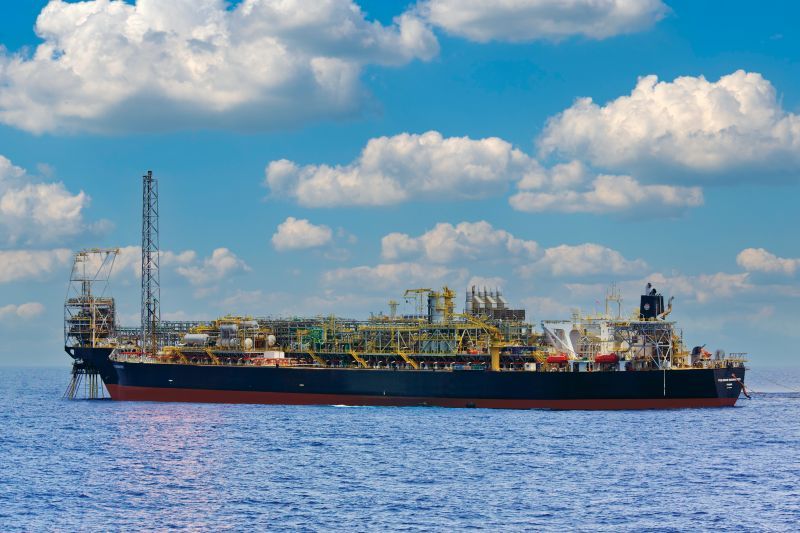
Deepwater exploration and production company Kosmos Energy expects to nearly double LNG exports from the Greater Tortue Ahmeyim (GTA) project offshore Mauritania and Senegal in 2026, according to its fourth-quarter 2025 results.
Following a complex ramp-up period in 2025, the project reached commercial operations date for the Gimi FLNG vessel while production performance and cargo loadings continue to strengthen. With operating costs falling and expansion plans under discussion, the question now facing the partnership is clear: can GTA evolve into one of West Africa’s defining gas hubs?
LNG Exports Accelerate as Production Stabilizes
Production from GTA Phase 1 steadily increased throughout 2025, culminating in December when output reached the FLNG vessel’s nameplate capacity of 2.7 million tons per annum (mtpa). During the fourth quarter alone, approximately eight LNG cargoes were exported, bringing to total for the year to about 18.5 cargoes.
This ramp-up followed a sequence of operational milestones, with gas first flowing through the offshore system at the end of December 2024, LNG production beginning in February 2025 and the project’s inaugural cargo exported in April. Commercial operations were officially declared in June.
Momentum has carried into 2026, with year-to-date production averaging around 2.9 mtpa equivalent, slightly above nameplate capacity due to cooler seasonal conditions. By early March, around 6.5 LNG cargoes and one condensate shipment had already been loaded.
“2025 was a year of laying the foundation for improved operational and financial performance,” said Kosmos Energy CEO Andrew G. Inglis. “In the past few months, we are starting to see the results of the team’s hard work and expect to deliver more wins in 2026 as we continue to grow production, reduce costs and enhance the resilience of our balance sheet.”
If current performance continues, the partnership expects exports to nearly double this year to as many as 36 LNG cargoes. The project is also expected to ship roughly three condensate cargoes in 2026, adding an additional revenue stream during the early production phase.
Operational Milestones and Phase 2 Expansion
The ramp-up of GTA has also been accompanied by a series of operational achievements. Liquefaction trains were tested above nameplate capacity during commissioning, while reservoir performance has reportedly exceeded expectations, suggesting strong connected volumes within the field.
With Phase 1 now fully operational, the partners – led by energy major bp with Kosmos Energy as a key player alongside Senegal and Mauritania’s respective state-owned Petrosen and SMH – are turning attention toward optimization and expansion. The partnership aims to reduce operating costs by more than 50% per barrel of oil equivalent in 2026 through a streamlined operating model and refinancing of offshore infrastructure.
Phase 2 is expected to add between 2.5 and 3 mtpa of LNG capacity using a gravity-based structure designed to host liquefaction and storage facilities on the seabed. If sanctioned, the expansion could lift total project capacity to more than 5 mtpa.
GTA’s Role in the MSGBC Energy Landscape
The strategic importance of GTA has also been widely discussed across the regional energy sector. At the MSGBC Oil, Gas & Power 2025 conference in Dakar last December, the project was described as a historic milestone and a central pillar of West Africa’s emerging gas economy.
Industry leaders including Eng. Mohamed Hamel, Secretary General of the Gas Exporting countries Forum and Sokhna Diarra Ndiaye, In-Country Operations Specialist for bp, highlighted its rapid transition from construction to production, noting that first gas was achieved in early 2025 and the first LNG cargo exported only months later. Operational performance during the ramp-up phase was also described as exceeding expectations for a project of such scale.
“This will be a catalyst of broader, inclusive industrialization,” stated Eng. Hamel. “We aim to leverage these resources to strengthen the nation’s standing on the global stage.”
“You must manage natural challenges such as reservoir behavior and the risks of hydrate formation in deepwater, which requires a strong flow-assurance system. Operational excellence is equally essential – from equipment reliability to skilled personnel – and it is important to embed this culture into all processes so every pillar of the value chain is clearly undersood,” said Ndiaye.
These themes will continue to shape discussions at the MSGBC Oil, Gas & Power 2026 conference – taking place in Dakar from December 1–3. As production grows and expansion plans advance, GTA’s role in regional gas exports, domestic energy supply and cross-border cooperation will remain a central topic.